; Iran_Aftab
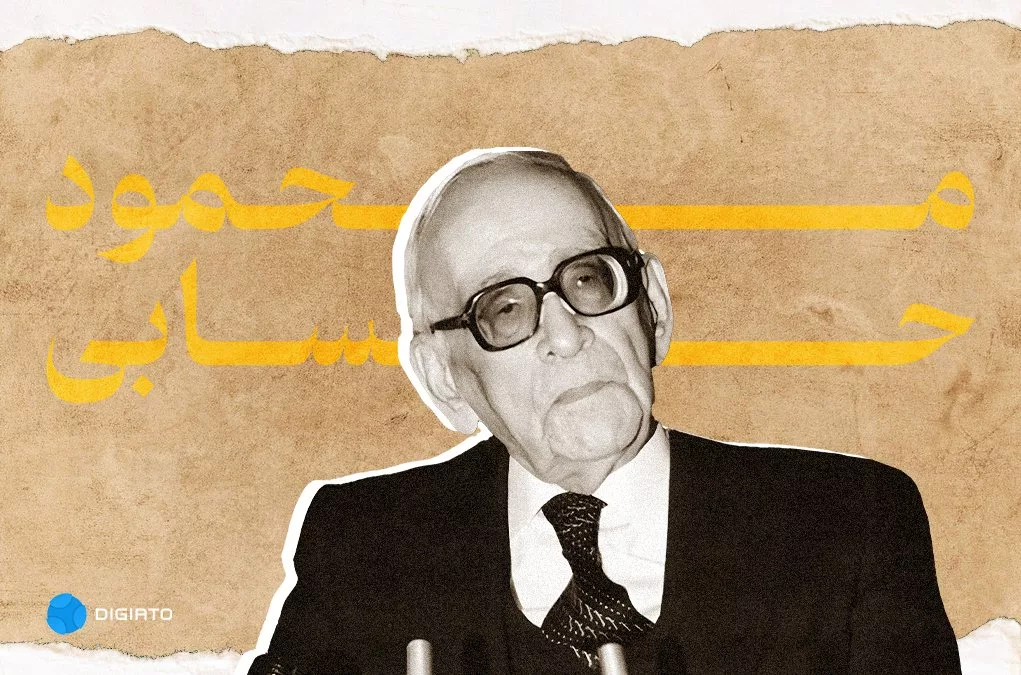
Dr. Mahmoud Hessabi is regarded as one of the founders of university physics in Iran. His efforts during his professional career in government and at the University of Tehran played a significant role in establishing and advancing this field in Iranian universities. In this article, we briefly review the limited biography of Hessabi and his achievements. We also address some controversial statements about him.
Birth and Childhood
Mahmoud Hessabi was born on March 3, 1903 in Tehran. His parents were originally from Tafresh. According to the book “Master of Love“, in which the biography of the prominent history professor was written by “Iraj Hessabi“, Hessabi’s childhood home was located in Shahpour Square or Shapour (today’s Islamic Unity) in the Qavam al-Dawlah bazaar, near the Armenian Church.
🔗 بیشتر بخوانید: ژاپن ایستگاههای معلق در آسمان را برای گسترش شبکه ۵G راهاندازی میکند
His paternal grandfather, “Ali Moazzamossaltan“, nicknamed “Haj Yamin al-Molk“, was a member of the cabinet of “Abdolhossein Farmanfarma“. Hessabi’s father, “Abbas Moazzamossaltaneh“, was also a government employee.
Hessabi’s family moved to Sham (modern-day Syria and Lebanon) during his childhood due to his father’s assignment. They resided at the Iranian Embassy in Beirut, which was under the sovereignty of the Ottoman Empire. After a while, his father returned to Iran, but Mahmoud remained in Beirut with his brother and mother so the children could study in European schools in Beirut.
🔗 بیشتر بخوانید: دانشمندان برای اولین بار اکسیژن را در سمت روز زهره تشخیص دادند
Education of Mahmoud Hessabi
Hessabi studied at the French Fransiscan School in Beirut. Although this school had evening classes, he and his brother discovered they could attend daily. There, they became familiar with the French language.
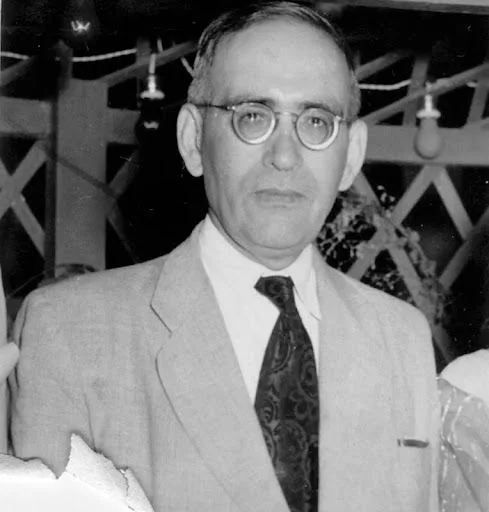
Hessabi then attended the French University of Beirut, where he continued his studies. He completed basic courses in literature and biology and graduated from this university at the age of 19. For further studies, he chose civil engineering and succeeded in graduating from the American University of Beirut at the age of 22. He then began working at a French engineering company.
🔗 بیشتر بخوانید: هواوی به گمان زیادً گوشی P۷۰ را به سنسور دوربین ساخت خودش تجهیزمیکند
Migration to France
Mohammad, the brother of Mahmoud, returned to Iran for a time and worked at the Ministry of Roads and Transportation. The two brothers managed to obtain an educational scholarship from the Iranian government through this channel. At the same time, the French company offered Mahmoud a position at its central office in Paris.
Thus, Mahmoud and his brother migrated to Paris. They initially pursued basic sciences. He studied physics in France until the age of 25.
Return to Iran
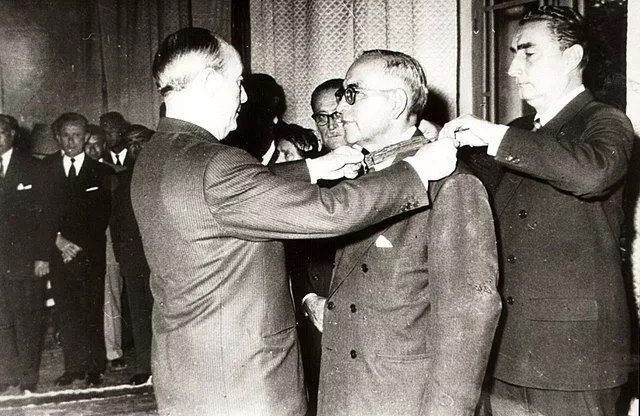
After graduating in physics, Hessabi returned to Iran and began working at the Roads and Transportation Administration.
According to sources available in the Islamic Consultative Assembly’s digital library, Hessabi served as a representative in the first, second, and third terms of the Iranian Senate. Exact details of his activities during those years are not clearly available. The First Senate served from 1328 to 1331, the Second from 1332 to 1338, and the Third from 1339 to 1340.
In this period, Mahmoud Hessabi served as Minister of Culture in the first cabinet of “Mohammad Mosaddeq” from 13 Azar 1330 to 14 Tir 1331.
After the establishment of the University of Tehran, Professor Hessabi assumed leadership of the Faculty of Engineering and, throughout his life at this university, played a prominent role in establishing physics education and research at the University of Tehran and in Iran.
Many individuals who worked with him stated that teaching and founding modern physics in Iran was his greatest achievement.
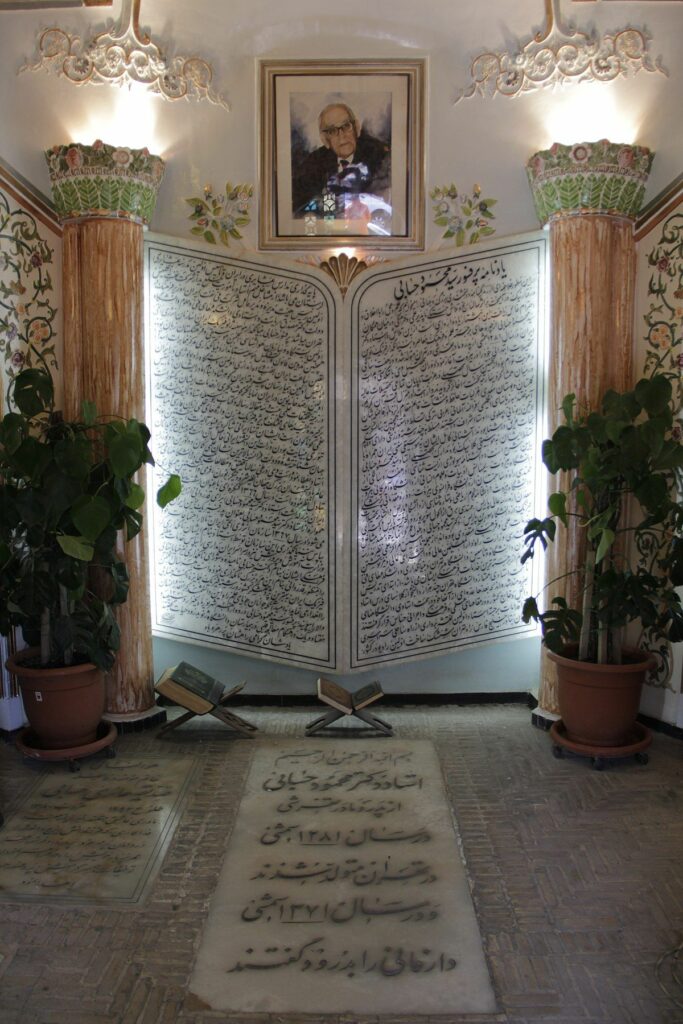
Dr. Mahmoud Hessabi passed away on September 2, 1992 in Geneva, Switzerland. His resting place is beside other family members in the city of Tafresh.
Achievements of Mahmoud Hessabi in Iran
Numerous achievements are attributed to Mahmoud Hessabi. These include founding the first nomadic schools, establishing the higher education institute, setting Iran’s official time, and others.
Many critics have accused the accounts of Hessabi’s life of exaggeration and hyperbole. Among the controversial achievements attributed to him, two stand out prominently, which we will discuss further.
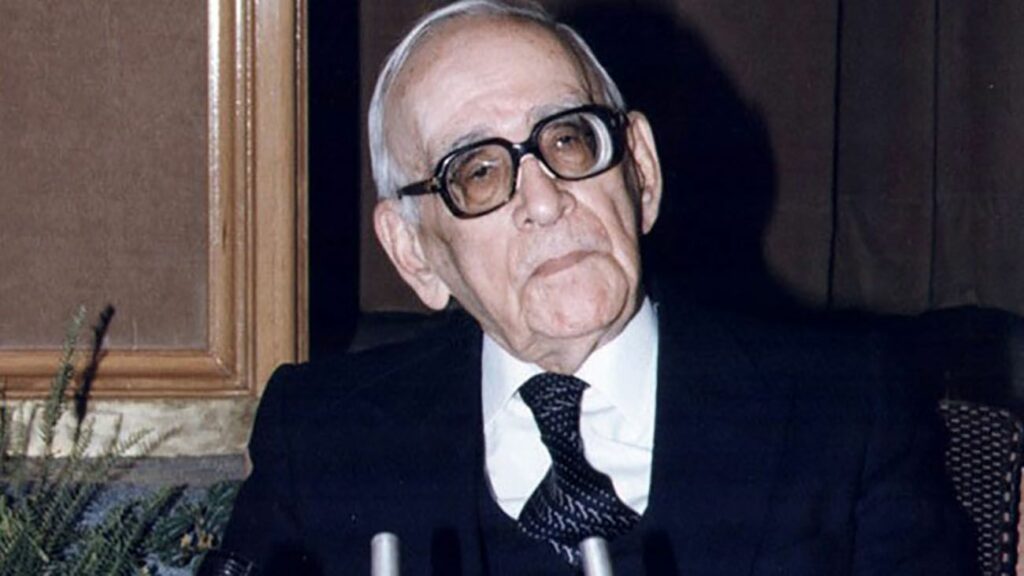
“Mahmoud Hessabi, the Only Iranian Student of Einstein”
In the book “Master of Love“, Mahmoud Hessabi is quoted as saying:
“I proposed several theories in my research in the field of physics. One concerns the sensitivity of photoelectric cells, another the passage of light through the vicinity of matter, and the last is the theory of the infinitude of particles. To present my findings to physics scholars, I had to travel to Europe. In various countries, I met scientists such as Bohr, Fermi, Born, Dirac, and Schrödinger. Their opinion was that since my theories were highly complex, it would be better to approach Professor Einstein and discuss my ideas with him.”
“Master of Love”, Iraj Hessabi
Subsequently, the text states that Hessabi was said to be one of five individuals who could have occupied Einstein’s chair. According to the account, Einstein told him that his mind had been engaged with Hessabi’s theory a month prior. Ultimately, Einstein claimed that this theory would one day revolutionize physics in the not-so-distant future.
These statements may appear exaggerated. Nevertheless, many people refer to Hessabi as Einstein’s only student. However, it appears that Hessabi met Einstein only once in a brief public encounter.
Another point is the reference to a theory named “Infinitude of Particles“. Two short articles by Mahmoud Hessabi on the world of particles are available. The first is an English article titled “Permanent Particles“ published in 1947. In this article, a specific solution of Maxwell’s equations within the framework of general relativity is examined.
The second article is titled “Model of the Infinite Particle“, published in a French journal in 1957.
Hessabi also published another English article in 1947 titled “Theoretical Evidence for the Existence of a Charged Particle with Light and Mass Greater Than the Electron“ published.

“Mahmoud Hessabi, Founder of the University of Tehran”
Another major achievement attributed to Mahmoud Hessabi is the founding of the University of Tehran. In the book “Story of Love”, it is claimed that Hessabi convinced Reza Shah to establish the University of Tehran. Reza Shah then instructed him to prepare the university’s foundation based on the model of Parisian universities.
Many individuals familiar with Mahmoud Hessabi’s life reject this claim. According to the University of Tehran’s website, in 1307 (1928), Hessabi presented a proposal for establishing a central comprehensive university to the then Minister of Culture, Dr. “Ali Asghar Hakmet“, among institutions.
In reality, the founding of the University of Tehran should be credited to the efforts of individuals such as “Ali Asghar Hakmet“, “Ali Akbar Siasi“, “Isa Sediq“, and others at the beginning of the 1310s (1930s). These individuals have documented the exact date of the university’s founding in their writings and memoirs, and no trace of Mahmoud Hessabi appears in these records.
For example, contrary to the story previously mentioned about Mahmoud Hessabi, Isa Sediq traveled to the United States in 1310 (1931) on government orders to present the proposal for founding the University of Tehran based on the American university model to the government. Isa Sediq detailed his efforts to establish the University of Tehran in his books “One Year in America” and “Memoirs of a Lifetime” with complete specifics.
Conclusion
In this article, we have reviewed the biography of Professor Mahmoud Hessabi. After studying physics in France, Hessabi returned to Iran and worked in government administrations. He provided valuable and competent services to Iran through this path. Moreover, he played a role in establishing and strengthening modern physics at the University of Tehran and was among those who promoted this science in Iran.
Today, numerous false or exaggerated achievements are attributed to him. It appears that these claims not only fail to elevate Hessabi’s true historical standing in contemporary Iran, but the exposure of these fabrications in recent years has caused irreparable damage to the status and reputation of this prominent national figure.
Frequently Asked Questions
Did Mahmoud Hessabi and Albert Einstein meet?
They met once during a public encounter and exchanged a few words. However, the claims that Dr. Hessabi was Einstein’s student or colleague are unfounded.
Is Mahmoud Hessabi the founder of the University of Tehran?
The story attributing the founding of the University of Tehran to Mahmoud Hessabi is incorrect. The founders of the University of Tehran should be considered individuals such as Ali Asghar Hakmet, Ali Akbar Siasi, and Isa Sediq. They have documented the history of the university’s establishment and their own efforts in writing, and no trace of Mahmoud Hessabi appears in those records.
Did Mahmoud Hessabi have expertise in literature, art, and music?
He was reportedly interested in these subjects and conducted some studies in them, but he was not a specialist in any of them.
They met once during a public encounter and exchanged a few words. However, the claims that Dr. Hessabi was Einstein’s student or colleague are unfounded.
The story attributing the founding of the University of Tehran to Mahmoud Hessabi is incorrect. The founders of the University of Tehran should be considered individuals such as Ali Asghar Hakmet, Ali Akbar Siasi, and Isa Sediq. They have documented the history of the university’s establishment and their own efforts in writing, and no trace of Mahmoud Hessabi appears in those records.
He was reportedly interested in these subjects and conducted some studies in them, but he was not a specialist in any of them.
Category: Biographies
[ad_2]